พาราเมทริกแบบไดนามิก
คงโครงสร้าง
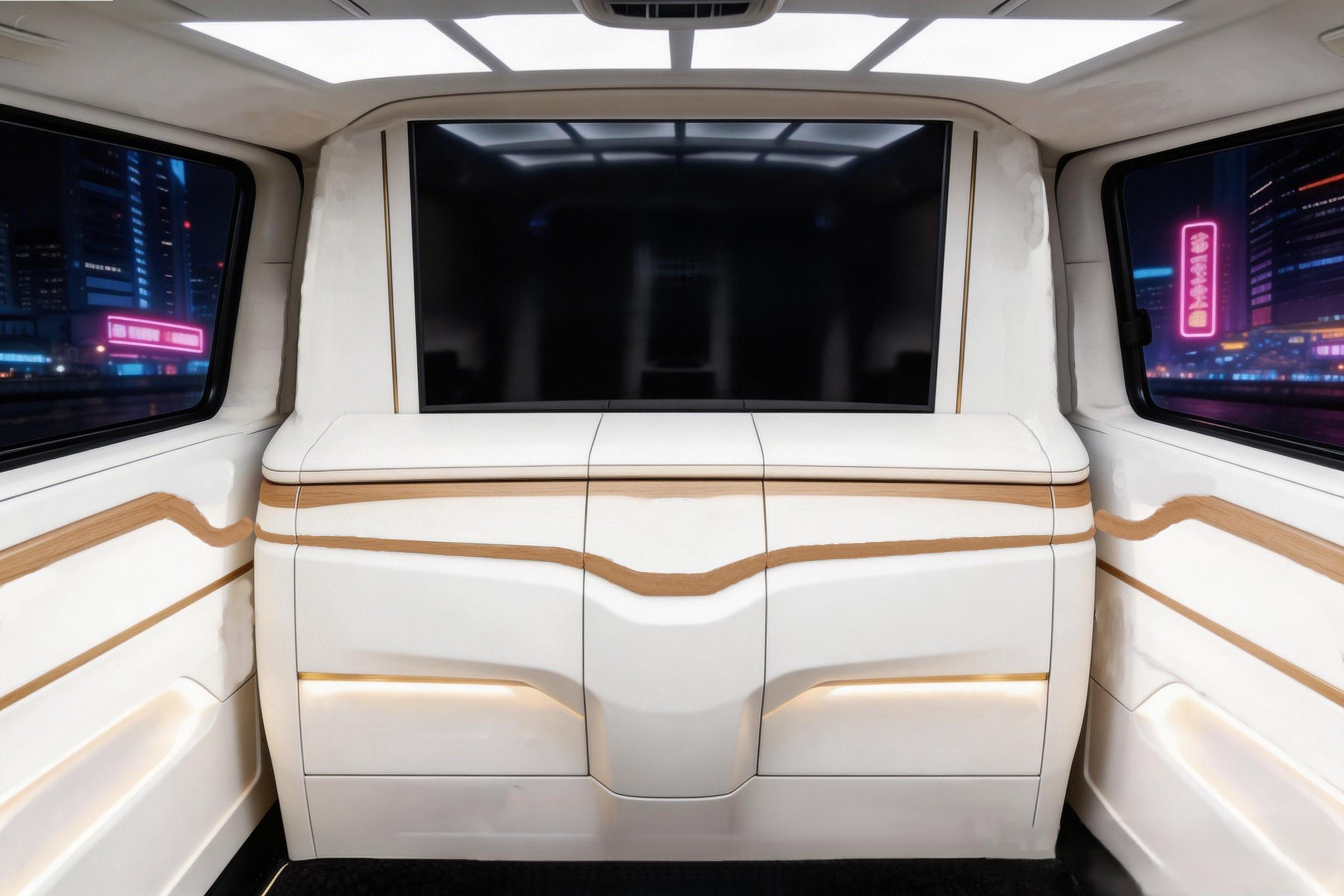


An incredibly lifelike, richly detailed, photorealistic interior photo of a luxury private jet lounge, possibly within a subterranean airport terminal, set in a futuristic urban environment. The scene is illuminated by a soft, diffused light emanating from recessed ceiling panels and subtle under-cabinet LED strips, creating an opulent yet tranquil atmosphere. Captured with a wide-angle lens, emphasizing the sleek, curved lines of the interior and the panoramic views outside, highlighting the interplay of smooth, matte white upholstery, warm, reeded wood accents, and polished chrome details. The existing design, with its stark white surfaces and minimal wood accents, already hints at a futurist aesthetic. However, we can elevate this by introducing dynamic parametric design elements that redefine the sense of space and luxury. Instead of the current angular ceiling panels, envision a flowing, organic ceiling structure, perhaps mimicking the gentle undulations of a cloud, constructed from a pearlescent material that subtly shifts color. The matte white upholstery could be replaced with a rich, deep sapphire or emerald velvet, offering a more tactile and luxurious experience. The reeded wood accents could be reimagined as sculpted, parametric inlays that ripple and flow across the walls and cabinetry, creating a visual rhythm. The large screen, currently a dominant, albeit dark, feature, could be seamlessly integrated into the parametric design, perhaps a dynamic display that can alter its opacity, becoming a translucent window or an immersive panoramic vista at the touch of a button. The cabinetry below could be reconfigured to house hidden amenities, like a retractable bar or a climate-controlled humidor, accessible through touch-sensitive panels. The lighting would be entirely programmable, capable of shifting from a soft, ambient glow for relaxation to a dynamic, vibrant mood for entertaining, with integrated accent lighting that traces the parametric curves of the architecture. The furniture would be bespoke and sculptural, with low-slung, deeply cushioned seating upholstered in contrasting but complementary textures – perhaps a soft, dove-grey cashmere and a rich, burnished leather. A central, highly polished obsidian coffee table, with a subtly etched geometric pattern, would anchor the seating area. The floor could be a plush, deep-pile charcoal carpet, interspersed with inlaid chrome detailing that echoes the ceiling and wall elements. The imagined interaction with the outside view would be profound. As the transport moves through the terminal, the windows, currently displaying a static, neon-lit cityscape, could become interactive displays. Imagine the cityscape appearing to move, with distant vehicles gliding by, or dissolving into personalized digital art installations that reflect the mood of the occupants. The soft glow from the terminal's architecture would subtly bleed into the interior, blurring the lines between the external and internal environment. The proportions and balance would be carefully considered, with the flowing parametric lines creating a sense of both expansive openness and intimate enclosure. The human scale is respected through the deep, comfortable seating and the ergonomically placed controls, while the grand gesture of the parametric architecture elevates the experience beyond the everyday. The overall atmosphere would be one of sophisticated repose, a sanctuary of advanced design that offers both unparalleled comfort and a stimulating, artful environment, ready to whisk its occupants away to their next destination in absolute style.